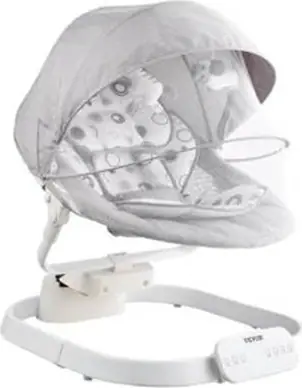
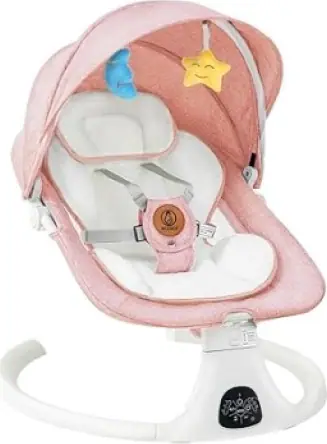
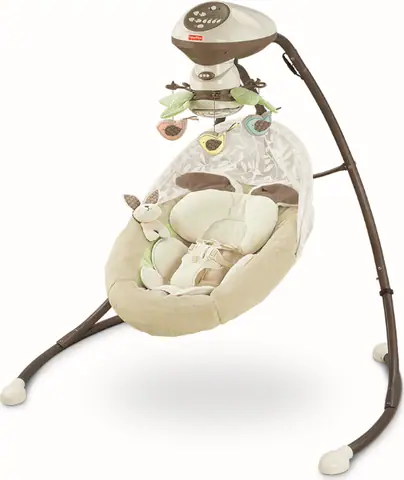
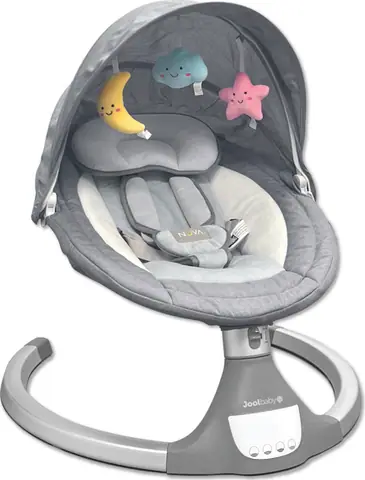
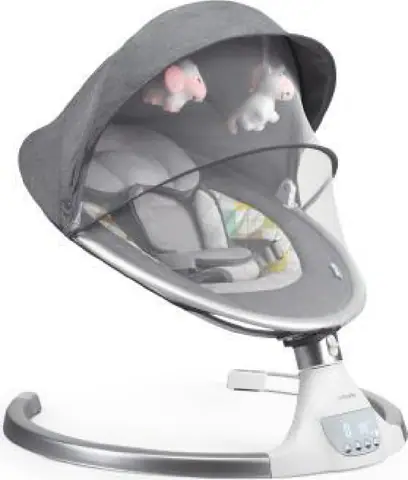
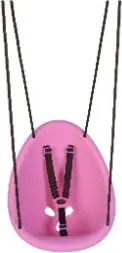
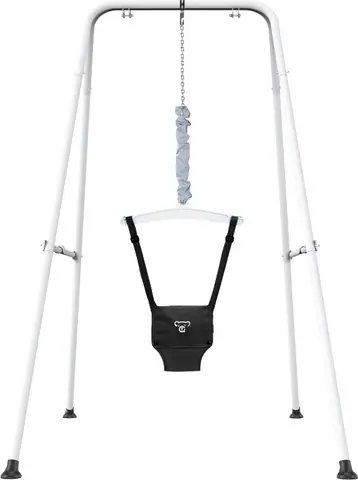
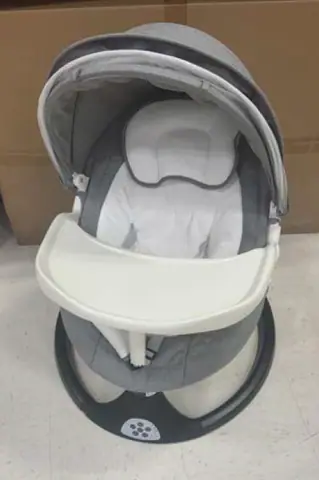
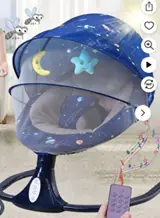
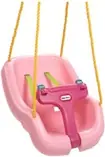
The baby jumper, baby swing and 2-in-1 baby jumper & swing can become unstable, posing fall and impact hazards. Additionally, the hanging restraint straps and seat openings can pose strangulation hazards.
The swings were marketed for infant sleep and have an incline angle greater than 10 degrees, violating the mandatory safety standard for Infant Sleep Products and the ban on inclined sleepers under the Safe Sleep for Babies Act, posing a deadly suffocation risk.
The swings pose a deadly suffocation risk because they were marketed for infant sleep and they have an incline angle greater than 10 degrees, in violation of the CPSC's Infant Sleep Products Standard and Safe Sleep for Babies Act. The swings also fail to meet mandatory warning requirements under the swing standard. In addition, the remote control for the swing contains a lithium coin battery and the products are missing the required warnings and instructions for consumer products containing button cell and coin batteries under Reese's Law. When button cell or coin batteries are swallowed, the ingested batteries can cause serious injuries, internal chemical burns and death.
The swings pose a suffocation hazard and a risk of serious injury or death to babies, because they were marketed for infant sleep and have an incline angle greater than 10 degrees, in violation of the Safe Sleep for Babies Act. The swings also fail to meet the mandatory warning requirements under the swing regulations. In addition, the remote control included with the swings contains a lithium coin battery and is missing the required warnings and instructions for consumer products containing button cell and coin batteries under Reese's Law.
The swings pose a suffocation risk because they were marketed for infant sleep, and they have an incline angle greater than 10 degrees, in violation of the Safe Sleep for Babies Act. In addition, the swings fail to meet mandatory warning requirements under the swing standard and are missing the required warnings and instructions for consumer products containing button cell and coin batteries under Reese's Law.
The swing should never be used for sleep and bedding materials should never be added to it. If the product is used for sleep or bedding material is added, the headrest and body support insert on the seat pad can increase the risk of suffocation.
The swings pose a suffocation risk because they were marketed, intended, or designed for infant sleep, and they have an incline angle greater than 10 degrees in violation of the federal safety regulations for Infant Sleep Products and the Safe Sleep for Babies Act. The swings also violate other requirements for infant swings and the labeling requirements for Reese's Law because the remote contains a button or coin-cell battery.
The swings pose a suffocation risk because they were marketed, intended, or designed for infant sleep, and they have an incline angle greater than 10 degrees in violation of the CPSC's Infant Sleep Products Regulation and the Safe Sleep for Babies Act. In addition, the swing fails to meet mandatory warning requirements regarding sleep under the swing standard.
The swing violates the Safe Sleep for Babies Act because the product was marketed for infant sleep and has an incline angle greater than 10 degrees. Infant fatalities have occurred in inclined sleepers, after the infants rolled from their back to their stomach or side while unrestrained, or under other circumstances. The swing also violates the Safety Standard for Infant Swings.
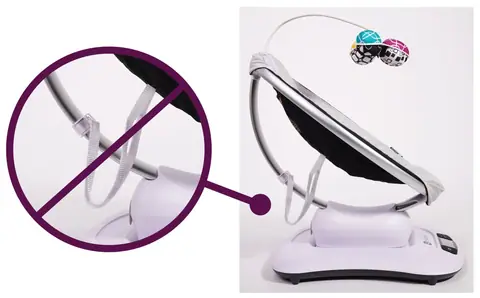
When the swing or rocker is not in use, their restraint straps can dangle below the seat and non-occupant crawling infants can become entangled in the straps, posing a strangulation hazard.
Totals add up the figures the notices state, counting a reannounced or restated recall once; 22 of 37 notices add a unit count. A notice that gives no number adds nothing.
Counted across all 37 notices on file as of October 31, 2026. Each line says how many notices it rests on.
Where they were sold
Amazon (12), Walmart (6), Target (4), and Wayfair (1) are the stores named most often in the 22 notices that say where baby & toddler swings were sold. 13 of the 22 notices mention online sales.
What buyers paid
The 22 notices that give a price range from $17 to $250. Half of them name a price of $70 or less.
How long they were on sale
By the 21 notices that give sale dates, half the products were on sale for 13 months or less; the longest for 13.5 years. Half the recalls came within 13 months of the first sale; the other half reached products that had been on sale longer.
What the recalls offered
A refund in 9 of the 14 notices that name a remedy, a repair in 4, new instructions in 2, a replacement in 1. Some notices offer more than one.
14 of the 23 notices that describe incidents report at least one; 3 report injuries and 3 report deaths. 9 said none had been reported when the recall was announced.
How the notices identify affected units
14 of the 37 notices list model numbers. They also name serial numbers in 1, date codes or manufacture dates in 10, lot or batch numbers in 1. A matching model number is a reason to open the notice, not the last word.
Where the notices say the numbers are: “on a label on the back of the swings”, “on a label on the frame of the swing”, and “on a small white sticker on the bottom of the swing seat under the foot area”.
Where they were made
China (14), United States (3) and Mexico (2), in the 18 notices that name a manufacturing country.
More or fewer than before
9 baby swing notices in 2021–2025, up from 3 in 2016–2020. Across all CPSC notices on file, the count rose 16% over the same years.
How many baby & toddler swings have been recalled?
As of October 31, 2026, CPSC has published 37 recall notices for baby & toddler swings since 1982, covering at least 11 million units. The most recent is “Taleco Gear Recalls Baby Jumpers, Baby Swings and 2-in-1 Baby Jumper & Swings Due to Risk of Serious Injury or Death from Fall and Strangulation Hazards” (CPSC 26-688), announced August 13, 2026.
Are there any baby swing recalls in 2026?
Yes. As of October 31, 2026, CPSC has published 1 recall notice for baby & toddler swings in 2026, on August 13, 2026 (CPSC 26-688).
What is the largest baby swing recall?
“CPSC, Graco Announce Recall of Infant Swings” (CPSC 00-098), announced April 13, 2000: about 7 million units.
Which brands have recalled baby & toddler swings?
Brands named most often: Fisher-Price (5), Little Tikes (4), Century Products (3), Graco (3), Graco Children's Products (2), Playskool (2), Sears (2) and Baby Trend, plus 16 more brands. Brand-name products are often made by another firm, so one recall can span several brands.
How do I check if my baby swing is recalled?
Find the model number on the product's rating label, then type it into the model-number lookup on this page. A match means the number appears in an official CPSC notice; open that notice to confirm any date codes or serial ranges it lists. No match is not proof that a product is safe. 14 of the 37 notices here list model numbers. They also name serial numbers in 1, date codes or manufacture dates in 10 and lot or batch numbers in 1.
What should I do if my baby swing is recalled?
Follow the remedy in the official notice and contact the firm it names. Across baby swing recalls, the remedies offered most often are refund (9), repair (4) and new instructions (2).